What Is Dynamic Keyword Insertion?

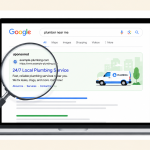
Dynamic Keyword Insertion allows Google Ads to automatically insert the keyword that triggered your ad into the ad text, usually in the headline.

Instead of writing separate ads for every keyword variation, DKI dynamically customizes your ad to closely match the user’s search query.

Simple Example

If your ad headline is written as:

{KeyWord: Truck Accessories Shop}

And the keyword that triggers your ad is:

  • truck accessories near me


Your ad headline will appear as:

        Truck Accessories Near Me

If Google can’t insert the keyword (due to length or policy issues), it will show the default text:

Truck Accessories Shop

How Dynamic Keyword Insertion Works

1.A user searches on Google

2.Their search matches one of your keywords

3.Google inserts that keyword into your ad headline or description

4.If insertion fails → default text is shown

⚠️ Important:

DKI only pulls from your keyword list, not from your ad copy or landing page.

DKI Syntax (Correct Way)

Use this format:

{KeyWord:Default Text}

  • {KeyWord} → controls capitalization

  • Default Text → fallback if insertion fails

Capitalization Options

Syntax

Result

{KeyWord}
Truck Accessories
{keyword}
truck accessories
{KEYWORD}
TRUCK ACCESSORIES

Benefits of Using Dynamic Keyword Insertion

Higher Ad Relevance
Your ad mirrors what the user searched for.

Improved Click-Through Rate (CTR)
Users are more likely to click ads that feel personalized.

Better Quality Score
Higher relevance can lead to lower CPCs.

Faster Campaign Scaling
No need to create dozens of similar ads.

When You SHOULD Use DKI

DKI works best when:

  • Keywords have similar intent

  • You use Exact or Phrase match

  • Campaigns are tightly themed

  • You run local service or product-based ads

Great Use Cases

  • “Service near me” campaigns

  • Local installation services

  • High-intent product searches

Example:

{KeyWord:Windshield Replacement Near You}

When You SHOULD NOT Use DKI

Avoid DKI when:

  • Keywords vary widely in meaning

  • You’re using Broad Match aggressively

  • Ads require strict compliance (finance, legal, medical)

  • Branding and messaging must stay consistent

Bad Example

Keywords:

  • truck accessories

  • truck jobs

  • truck driving salary

DKI headline:

{KeyWord:Truck Accessories}

This could generate nonsense ads like:

Truck Jobs

Common DKI Mistakes (Very Important)

❌ Mixing unrelated keywords in one ad group

➡️ Leads to awkward or misleading ads

❌ Forgetting character limits

➡️ Keyword too long → default text shows

❌ Using DKI everywhere

➡️ Looks robotic and reduces trust

❌ Not reviewing search terms

➡️ Weird phrases can slip through

Best Practices for Dynamic Keyword Insertion

✅ Use Tight Ad Groups
Only closely related keywords per ad group.

✅ Always Add a Strong Default Text
Your default should still convert.

✅ Combine DKI + Static Headlines
Use 1 DKI headline + 2 strong static headlines.

✅ Monitor Search Term Reports Weekly
Add negatives aggressively.

Example of a Smart DKI Setup

Keywords:

truck accessories near me

truck accessories shop

custom truck accessories

Headline 1:

{KeyWord:Truck Accessories Near You}

Headline 2:

Professional Installation Available

Headline 3:

Local Truck Accessories Shop

This keeps ads relevant and controlled.

Final Thoughts: Is DKI Worth Using?

Dynamic Keyword Insertion is not a “set it and forget it” feature.

It’s a scalpel, not a hammer.

✔ Use it carefully

✔ Control your keywords

✔ Always review search terms

When done right, DKI can significantly improve performance.

When done wrong, it can quietly drain your budget.

Get a Free, In-Depth SEO Audit of Your Website